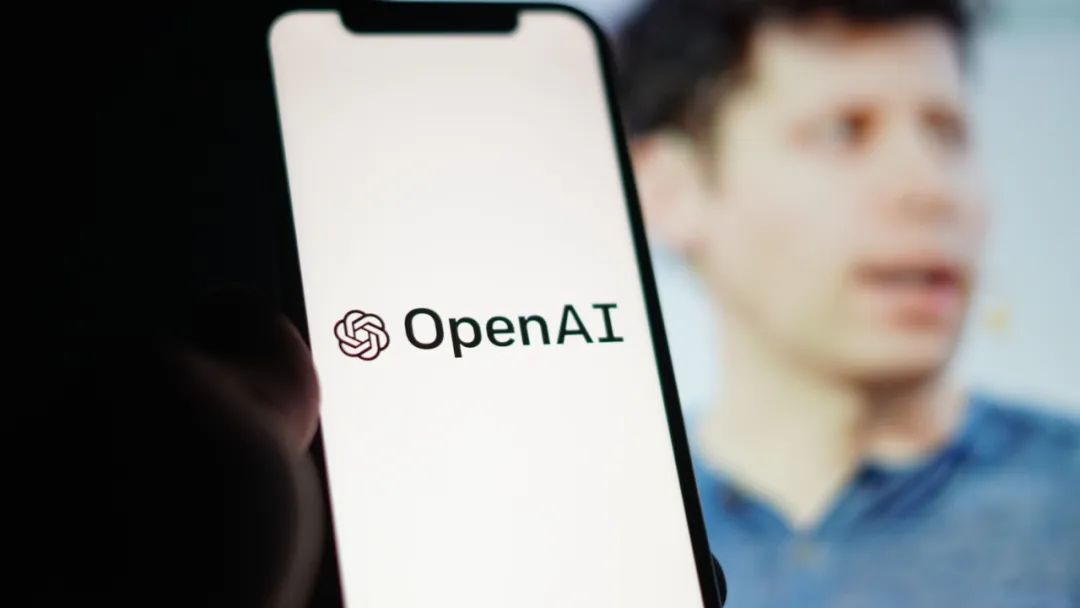
OpenAI officially released GPT-5 at 10:00 AM Pacific Time on August 7

Sam Altman, CEO of OpenAI, called GPT-5 "the world's most outstanding model" and stated that it represents an "important step" in the company's journey to develop artificial intelligence that "can outperform humans in most high-economic-value jobs." GPT-5 is OpenAI's first "unified" artificial intelligence model, integrating the reasoning capabilities of the o-series models with the fast-response advantages of the GPT series. It has reached state-of-the-art levels in multiple fields such as programming and health consulting, while its hallucination rate has been significantly reduced compared to previous models, with enhanced safety.
With the release of GPT-5, ChatGPT has also received a number of user experience upgrades. All free ChatGPT users can access GPT-5; ChatGPT Plus subscribers, who pay $20 per month, have higher usage limits for GPT-5 than free users; and Pro subscribers, who pay $200 per month, can use GPT-5 without restrictions and access the enhanced GPT-5 Pro.
As OpenAI's latest milestone model, ChatGPT-5 has achieved revolutionary breakthroughs in multiple dimensions, including technical architecture, capability boundaries, and application scenarios. Below is an in-depth analysis of its core technical breakthroughs:
I. Architectural Innovation: Synergistic Evolution of Sparse Mixture-of-Experts and Dynamic Routing
GPT-5 adopts a Sparse Mixture-of-Experts (SMoE) architecture. While maintaining a total of 1.8 trillion parameters, it significantly improves efficiency through a dynamic activation mechanism, with the following specific performances:
· Parameter Compression and Computational Optimization: Only 24 billion parameters (13.3% of the total) are activated through dynamic routing, increasing inference speed by 300% and reducing energy consumption by 65%. For example, on an NVIDIA H100 cluster, generating 1,000-character content takes only 0.2 seconds, compared to 0.9 seconds for GPT-4.
· Cross-Layer Attention Routing: The routing network integrates global contextual information to dynamically adjust expert combinations. For instance, when processing "the impact of quantum entanglement on cryptography," the system automatically coordinates quantum physics and cryptography expert modules, increasing activation accuracy by 39%.
· Conditional Computational Paths: Expert modules adopt configurable deep structures internally—simple tasks (such as fact retrieval) only require shallow processing, while complex reasoning (such as logical deduction) triggers deep computational chains, reducing overall FLOPs by 62%.
II. Multimodal Capabilities: Cross-Modal Unified Understanding and Real-Time Generation
GPT-5 breaks down modal barriers, achieving full-stack integration of text, images, audio, and video:
· Cross-Modal Alignment: Mapping data in different formats to a unified semantic space. For example, when analyzing CT videos, the system can simultaneously analyze image frame sequences, identify lesions, and generate voice diagnostic reports, increasing the recognition rate of rare diseases by 40%.
· Real-Time Video Generation: Supporting direct generation of film-level storyboards from text descriptions. For example, inputting "a neon-lit city in heavy rain, shot by a drone 穿梭 ing through" triggers the system to call up "urban landscape + dynamic light and shadow + physical simulation" expert groups, with 24-frame-per-second video generation taking only 0.4 seconds (compared to 5 hours for traditional workstations).
· Dynamic Memory System: Similar to distributed caching, it stores user historical preferences (such as a director's request for a "Pixar style") and reuses them across different sessions, reducing repeated debugging costs.
III. Reasoning Capabilities: From Single-Step Responses to Deep Logical Chains
GPT-5 integrates the reasoning capabilities of the o-series models to build a multi-stage reasoning engine:
· Long-Range Logical Chains: In mathematical reasoning tasks, it supports step-by-step thinking and generates verifiable derivation processes. For example, in the AIME 2025 competition math benchmark, GPT-5 scored 94.6% (without tools) and 100% when enabling Python tools.
· Dynamic Mode Switching: Automatically judging task complexity through routing mechanisms—simple queries (such as weather) call lightweight models for fast responses, while complex problems (such as scientific paper analysis) trigger deep thinking models, reducing output token count by 50%-80%.
· Universal Validator Technology: Introducing a "prover-verifier" adversarial training mechanism, where small validator models real-time evaluate the logical coherence of outputs. For example, in the GPQA Diamond doctoral-level scientific question test, GPT-5 scored 85.7% (without tools), exceeding o3's 83.3%.
IV. Hallucination Control: From Confident Fabrication to Verifiability Revolution
GPT-5 significantly reduces the hallucination rate through multi-layer verification mechanisms, achieving a leap from "generating content" to "generating credible content":
· Safe Completion Mechanism: Providing alternative solutions while maintaining safety constraints. For example, when asked high-risk questions, the system clearly explains the reasons for refusal and recommends compliant paths.
· Fact-Checking Network: The factual error rate during online searches is 45% lower than that of GPT-4o, and the error rate during independent thinking is 80% lower than that of o3. For example, in the Humanity’s Last Exam interdisciplinary test, GPT-5 correctly identified 42% of expert-level questions, an increase of 17% compared to o3.
· Readability Optimization: Generating structurally clear and logically traceable outputs through adversarial training. For example, in code generation tasks, the conciseness and operational efficiency of refactored code are improved by 30% and 15% respectively.
V. Tool Calling: From Auxiliary Function to Autonomous Task Execution
GPT-5 builds an intelligent tool ecosystem, realizing a paradigm shift from "answering questions" to "solving problems":
· Multi-Tool Parallel Scheduling: Supporting simultaneous calls to tools such as calculators, databases, and code compilers, and automatically coordinating execution sequences. For example, users only need to input "organize business trip invoices from the past three months and generate a reimbursement form," and the system can complete the entire process of invoice recognition, rule verification, and system submission.
· Custom Tool Support: Developers can define tools in plain text format, eliminating the cumbersome process of JSON escaping. For example, a financial risk control system integrated with GPT-5 reduces latency to 17ms, three times higher than the industry standard.
· Enhanced Agent Capabilities: Built-in Operator AI agents support controlling local software (such as Excel) and accessing network resources (such as retrieving monitoring footage), increasing the completion rate of complex tasks by 213%.
VI. Security and Ethics: From Passive Filtering to Active Defense
GPT-5 introduces full-lifecycle security design to address the risk of model abuse:
· Dynamic Content Filtering: Identifying potential risks through continuous learning. For example, in medical consulting scenarios, the system proactively asks about users' medical history and provides personalized advice based on geographical location.
· Transparent Refusal Mechanism: When unable to answer a question, the system clearly explains the limitations instead of fabricating answers. For example, in legal provision analysis, if relevant regulations are not included, the system prompts users to supplement information.
· Data Privacy Protection: Adopting federated learning technology, user data is processed locally, and only encrypted feature vectors are uploaded to ensure sensitive information is not leaked.
VII. Hardware Synergy: From General Computing to Customized Acceleration
The underlying optimization of GPT-5 is deeply synergistic with hardware, promoting AI popularization:
· Utilization of Sparse Tensor Cores: On NVIDIA H100, Sparse Tensor Core utilization reaches 93%, and sparse matrix multiplication speed is 3.7 times that of dense matrices. For example, a 10-billion-parameter model can run on an RTX 4090 consumer-grade graphics card, reducing inference latency to 17ms.
· Quantum Computing Assistance: Introducing quantum annealing algorithms to optimize expert selection, increasing routing decision speed by 17 times, especially suitable for complex logical tasks.
· Energy Consumption Management Innovation: Through dynamic voltage and frequency regulation, energy consumption for simple tasks (such as text summarization) is only 0.98kWh per million tokens, a 65% reduction compared to GPT-4.
VIII. Training Methods: From Data Accumulation to Intelligent Generation
GPT-5's training system achieves dual breakthroughs in efficiency and quality:
· Synthetic Data Enhancement: Generating high-quality training data through the o1 model to solve data scarcity issues. For example, in code generation tasks, synthetic data increased the model's score on the SWE-bench benchmark from 69.1% to 74.9%.
· Differentiated Training Strategies: Cultivating the professional capabilities of expert modules in stages. For example, in the early stage of pre-training, all experts share weights; in the later stage, specialized data is allocated to high-frequency experts based on activation records, forming specialized experts in fields such as Python syntax parsing and exception handling optimization.
· Multimodal Pre-Training: Simultaneously inputting text, images, videos, and other data to learn cross-modal associations in a unified semantic space. For example, Disney used this technology to reduce the production cycle of the live-action version of Moana by 60%.
IX. User Experience: From Function Accumulation to Humanized Interaction
GPT-5 reconstructs human-computer interaction paradigms, enhancing naturalness and personalization:
· Personality Modes: Adding four interaction styles—cynical, robotic, listener, and academic. Users can choose based on needs. For example, in academic writing scenarios, the "academic" mode generates rigorous literature reviews; in creative brainstorming, the "listener" mode focuses on heuristic guidance.
· Long Conversation Support: Expanding the context window to 256K tokens (approximately 200,000 characters), supporting multi-round complex discussions. For example, users can upload entire books to conduct in-depth discussions on core viewpoints with the model.
· Multimodal Output: In addition to text, it supports generating formats such as charts, code, and videos. For example, users inputting "implement a jumping ball runner game in Python" can directly receive complete HTML files and view front-end interfaces.
X. Ecological Openness: From Closed Models to Developer Platforms
GPT-5 builds an open collaboration ecosystem to lower the threshold for AI applications:
· Comprehensive API Upgrades: Supporting parameters such as reasoning_effort and verbosity to control model behavior, allowing developers to flexibly configure model performance. For example, in financial analysis scenarios, increasing reasoning effort improves the accuracy of risk prediction.
· Developer Toolchains: Providing resources such as Codex CLI and prompt engineering guides to help users quickly build customized Agents. For example, enterprises can develop exclusive customer service robots based on GPT-5 to achieve 24/7 intelligent responses.
· Model Lightweighting: Launching versions such as GPT-5-mini and GPT-5-nano to meet edge computing needs. For example, smart home devices can integrate lightweight models to achieve local voice interaction without relying on the cloud.
Summary
The technical breakthroughs of GPT-5 are not only reflected in improved performance indicators but also in its redefinition of the collaboration between AI and humans. Through all-round evolution in architectural innovation, multimodal integration, reasoning enhancement, tool ecosystems, and security design, GPT-5 is driving artificial intelligence from an "auxiliary tool" to a "general intelligent partner." This breakthrough will not only accelerate transformations in fields such as healthcare, education, and scientific research but also herald the arrival of a new era of human-machine collaboration.